The sun care experts from ISDIN are here to talk about a common skin condition, actinic keratosis.
While you may have never heard of it, an actinic keratosis is actually the most common form of precancerous skin lesion. However, is it something to worry about, or is it benign? The answer can be both. That’s why it’s important to understand more about this specific type of skin damage caused by the sun. We turned to The Skin Cancer Foundation for five actinic keratosis facts you should know:
Actinic keratoses fact #1: They affect over 58 million Americans.
With about 58 million Americans affected by an actinic keratosis (the name for a singular lesion) or actinic keratoses (plural for more than one lesion), this skin condition is often seen in adults aged 55 and older. That said, age isn’t always a determining factor. Anyone who’s had frequent, unprotected sun exposure over the years could develop one or more of these precancerous lesions.
Here are some of the risk factors for actinic keratoses, or AKs for short:
Having a lighter skin tone
Spending a lot of time in the sun, for work or enjoyment
Use of tanning beds
Age (40 years or older)
Actinic keratosis fact #2: Less than 10% of AKs turn into skin cancer
AKs are abnormal cell growths that are caused by long-term sun exposure. They’re considered a precancerous skin condition, but the good news is at least 90% of cases are benign, meaning they will not turn into cancer.
However, the cases that do turn into skin cancer are likely to become squamous cell carcinoma (SCC), the second most common type of skin cancer, and while SCC can sometimes be invasive and dangerous to your health, it can be curable when caught early. That’s why it’s important to follow a treatment plan with your dermatologist.
Actinic keratosis fact #3: Having one can mean more are likely to appear
Having one diagnosed AK can suggest that you have already developed more that aren’t visible yet. In fact, actinic keratosis is widely considered to be a condition that is rarely limited to one single spot. While they’re usually harmless, having AKs can increase your overall risk of developing skin cancer.
So, how can you be proactive? Make sure to check in with your dermatologist about any skin concerns as they come up, or at least once a year. Since actinic keratoses are caused by repeated exposure to UV radiation, always protect yourself from the sun.
Actinic keratosis fact #4:
It’s often easier to feel than see due to their texture Presenting differently in different skin, these precancerous lesions vary in size, shape and color. Many AKs start off as a small spot of uneven skin, with a pink or red color. They can be easy to miss as they are often mistaken for sun spots or warts. However, they tend to have one thing in common: a rough or scaly texture.
Here are the common areas that AKs appear and what they might look like:
Face and scalp: Many actinic keratoses appear on the face and bald scalp as flaky off-color patches.
Backs of hands: Since this area gets a lot of unprotected sun exposure, it’s a target for AKs.
Lips: A white area on the lips that’s rough to the touch and doesn’t go away could possibly be an actinic keratosis.
If you find anything on your skin that matches the above, make sure to schedule a skin exam with your dermatologist.
Actinic keratosis fact #5: Sun protection measures can help prevent future damage
Prevention is always the best treatment. Fortunately, there are proven steps that help reduce your risk of sun damage and its effects on your skin, including actinic keratoses.
Here’s what you can do to help protect yourself:
Do your best to avoid direct sun exposure and seek shade during midday hours when solar radiation is stronger. The smaller your shadow is, the stronger the sun.
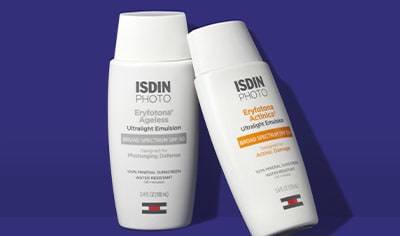
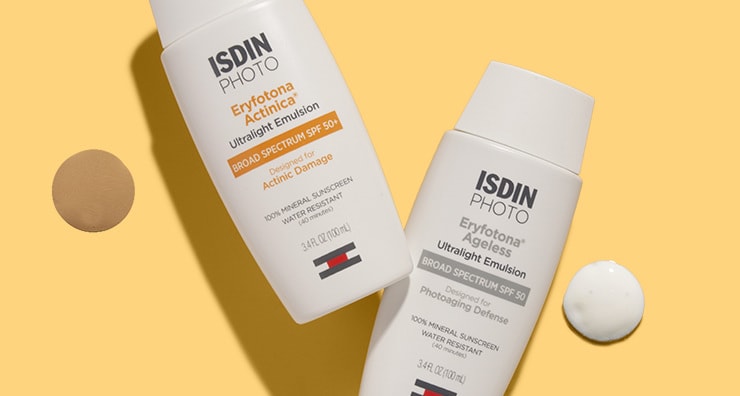
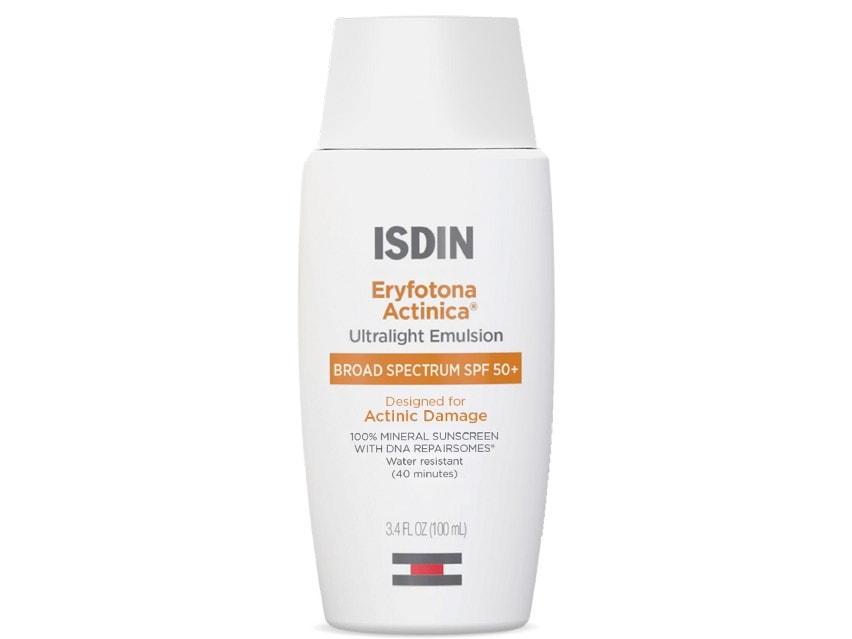
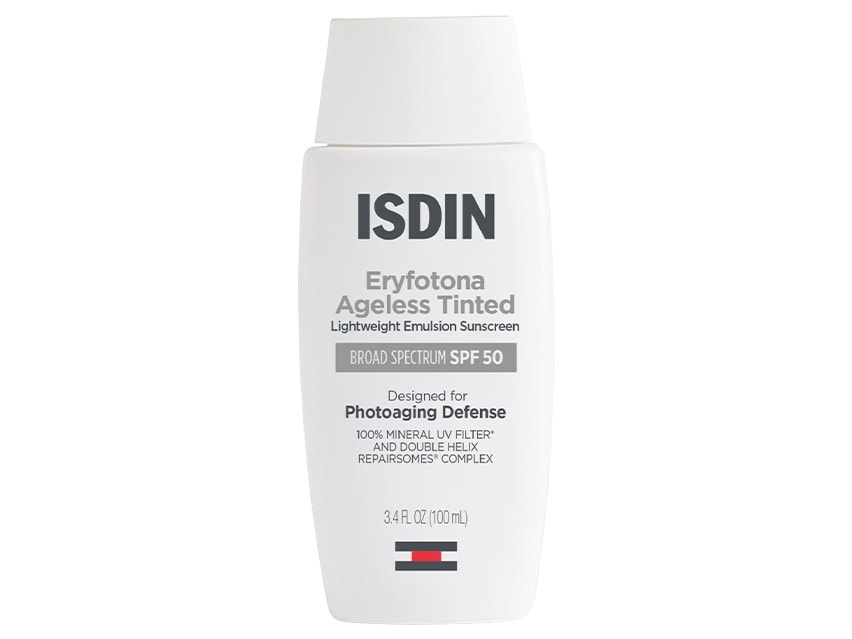
Remember to always use sunscreen on exposed skin. For dermatologist-recommended protection, use a high SPF broad-spectrum sunscreen such as ISDIN Eryfotona Actinic Daily Lightweight Mineral SPF 50+ Sunscreen or ISDIN Eryfotona Ageless Ultralight Tinted Mineral SPF 50 Sunscreen. Apply a generous amount fifteen minutes before sun exposure and reapply at least every two hours.
Use physical protection when it isn’t possible to avoid direct sun. Reach for sunglasses, umbrellas, hats and UPF clothing.
Avoid tanning beds. Remember that sun damage, including actinic damage, comes from UV radiation, and tanning beds are a highly concentrated source of UV radiation.
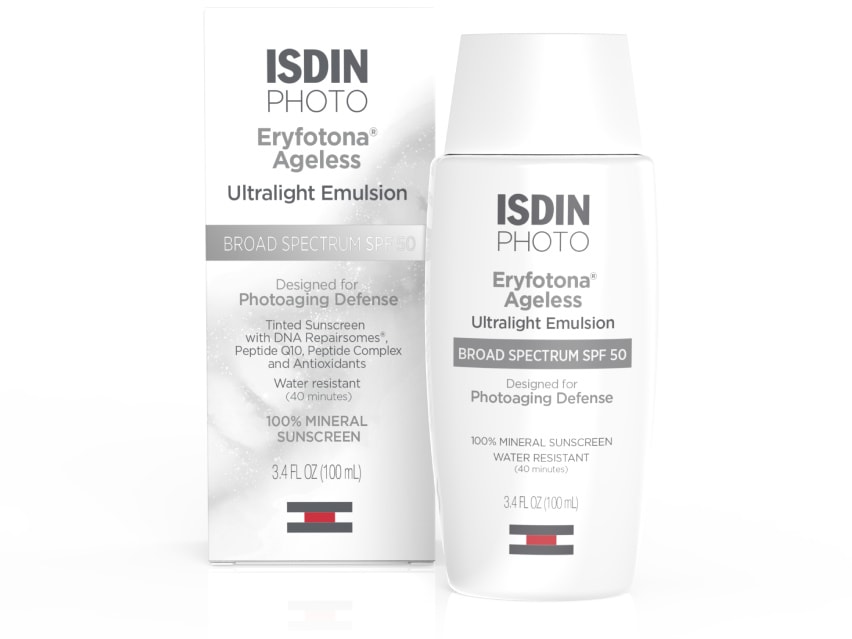
Now that you know more actinic keratosis facts, we hope you feel more empowered to protect yourself. You can learn more about how to correct visible sun damage on your face with these products from ISDIN.
Shop this blog

About the Author
Amy is a content strategist who turned a part-time obsession with skin care into a full-time passion. Her experience as a creative storyteller includes a range of lifestyle and technology topics across Washington D.C. and Barcelona. What's in her travel bag? Eye contour cream and sunscreen, always.
Other Posts by Amy IngrahamWhy does your skin hurt to touch even if...
9 Best Father’s Day gift ideas for every...
Follow us on social
Follow us on social networks and be one of the first to learn about sales, giveaways, and free samples