If you follow the aesthetic world, you’ve likely heard of the terms “exosomes” and “growth factors.” You’ve probably seen them in trending treatments, serums or even hair restoration solutions, but understanding how they actually work and how they differ can help you choose the right option for your skin goals.
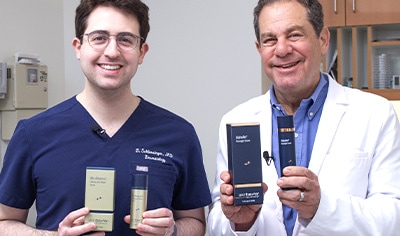
To help separate science from marketing buzz, board-certified dermatologists, Mohs surgeons and cosmetic surgeons, Dr. Joel and Dr. Daniel Schlessinger share how these technologies work, where they shine and where caution is still warranted. In this blog, we’ll discuss:
- What are growth factors in skin care?
- Why growth factor sourcing matters
- What are exosomes in skin care?
- Do exosomes really work?
- Exosomes vs. growth factors: How do they compare?
What are growth factors in skin care?
Growth factors are naturally occurring proteins that affect the growth of cells. They act like tiny messengers, telling cells when to repair, renew and regenerate. One way to think of them is a signal that activates cells and helps them to do their job, even if they are past their prime.
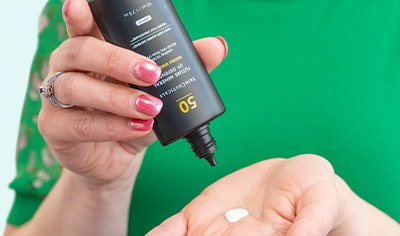
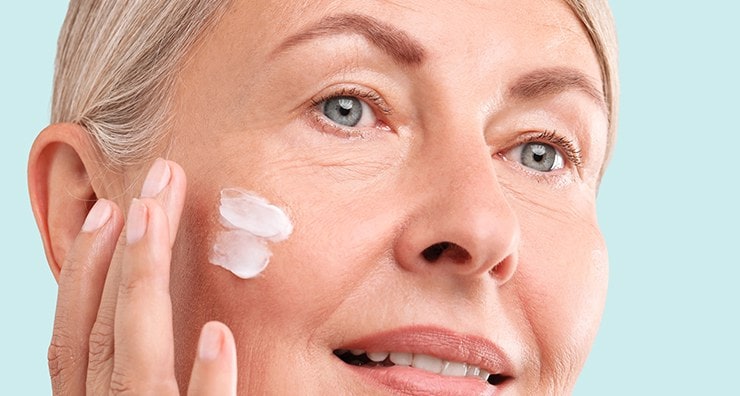
In skin care, growth factors are commonly found in targeted growth factor serums and post-procedure products designed to soften the appearance of fine lines, improve texture and support firmer-looking skin over time.
One well-known example is platelet-derived growth factor (PDGF), which plays a central role in wound healing and tissue repair. This same mechanism is used in medical treatments like platelet-rich plasma (PRP).
“Growth factors have decades of research behind them,” says Dr. Joel Schlessinger. “They’ve been proven to be reliable tools for supporting healthy skin function and encouraging visible rejuvenation.”
“Skin care products with growth factors are often well tolerated,” adds Dr. Daniel Schlessinger, “making them a great option for post-procedure care as well as aging or sensitive skin care routines.”
Why growth factor sourcing matters
While growth factors can be highly effective, where they are derived from is critical. Dr. Joel and Dr. Daniel Schlessinger emphasize that sourcing impacts both safety and results. Skin-identical or bioengineered growth factors designed to closely mimic those found naturally in the body are generally better tolerated and more predictable than other alternatives.
Dr. Joel Schlessinger explains, “When thoughtfully formulated, growth factor products enhance the skin’s natural repair processes, making them ideal for mature skin, sensitive skin and post-procedure recovery.”
What are exosomes in skin care?
Exosomes are microscopic vesicles released by cells as part of normal cellular communication. Think of them as delivery vehicles carrying proteins, peptides, lipids and other signaling molecules.
According to marketing claims, exosomes deliver growth factors that stimulate collagen production, reduce inflammation and accelerate healing. Proponents suggest that exosome therapy can improve skin texture, tone and firmness while diminishing premature signs of aging. However, the science is still evolving.
Dr. Joel Schlessinger explains, “So much is said about exosomes in the press that is truly questionable. While I am hopeful they will be a benefit, I still see no absolute proof they are doing what beauty influencers say they do.”
“A major concern with exosome therapy is the lack of standardization and regulation. Where the exosomes come from, how they're processed, what they contain and whether they're viable when applied to skin are all questions. Unlike FDA-approved formulas, most exosome products available haven't undergone rigorous safety and efficacy testing,” he adds.
Do exosomes really work?
The short answer? Maybe. Many patients report improvements in hydration, radiance and recovery, particularly when exosomes are used after procedures like microneedling or laser treatments. Some clinics also incorporate exosomes for hair loss.
However, because exosomes are a newer category, long-term data is still limited compared to growth factors.
Dr. Daniel Schlessinger shares, “While exosomes represent an interesting area of biological research, their application in aesthetic treatments is currently ahead of the science.”
Dr. Joel Schlessinger adds, “We’ve performed clinical evaluations of several leading exosome products in our clinical trials unit and alongside laser procedures, and the results were no better than the standard treatments we already use. I hope to see stronger clinical trials and more clearly defined treatment parameters in the future, and I plan to keep an open mind.”
Exosomes vs. growth factors: How do they compare?
While both support skin rejuvenation, they differ in structure, use and clinical history.
Growth Factors:
- Act as targeted signaling proteins
- Backed by decades of clinical research
- Well established for safety and efficacy
- Commonly used in daily serums and post-procedure skin care
- Ideal for long-term anti-aging maintenance
Exosomes:
- Contain multiple signaling molecules
- Support broader cellular communication
- Most often used in in-office procedures
- May improve recovery, luminosity and texture
- Outcomes can vary widely based on source and formulation
Growth factors have a long-standing track record in dermatology. Exosomes, while promising, are newer and less standardized.
“The right choice depends on your goals,” says Dr. Joel Schlessinger. “Growth factors are dependable and well-studied, while exosomes may offer enhanced rejuvenation when used in the appropriate clinical setting, but may be less dependable or, frankly, useless.”
One example patients often ask about is SkinMedica TNS Recovery Complex, which contains a proprietary blend of human fibroblast conditioned media that includes both growth factors and exosome-like vesicles. This type of formulation highlights how advanced skin care can combine proven growth factor technology with newer delivery systems.
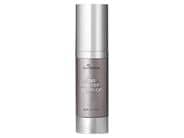
“Products like TNS Recovery Complex demonstrate how far growth factor technology has come,” says Dr. Daniel Schlessinger. “What’s important is that this formula is derived from well-studied, clinical sources. Growth factors with decades of clinical use give us confidence, while exosome-based components may enhance repair when properly formulated.”
“We’re seeing encouraging results,” adds Dr. Daniel Schlessinger, “but patients should prioritize evidence-based treatments. When used appropriately, advanced formulas that include growth factors and carefully sourced exosome technology can meaningfully support visibly healthier skin.”
The bottom line
When it comes to exosomes and growth factors, both have potential for skin rejuvenation, but they aren’t interchangeable. Growth factors offer trusted, research-backed benefits, while exosomes may provide a next-level boost when sourced and formulated appropriately. A board-certified dermatologist can help you understand which aesthetic treatments and scientifically proven skin care ingredients are right for your unique needs and concerns.
Interested in enhancing your skin care routine with proven ingredients? Learn about niacinamide and vitamin C and how to use them like a skin care expert.
SkinCeuticals Advanced RGN-6 vs. Triple ...
The 6 best scalp scrubs for a calm, bala...
Follow us on social
Follow us on social networks and be one of the first to learn about sales, giveaways, and free samples