Do peptides really work? A dermatologist's guide to peptide skin care
Peptides are having a major moment in skin care. From serums and moisturizers to eye creams and neck treatments, these small but powerful ingredients are showing up in formulas designed to improve firmness, smooth fine lines, and support healthier-looking skin. But with so many products promising more youthful-looking skin, it's fair to wonder: Do peptides for skin actually work, or are they just another skin care trend?
The answer is a little more nuanced than you might think. Research suggests that certain topical peptides can help improve the appearance of wrinkles, support collagen production, and promote smoother, firmer-looking skin. However, the results depend on the specific peptide, its formulation, and how well it is delivered into the skin.
To help separate science from marketing, board-certified dermatologists, Mohs surgeons, and cosmetic surgeons Dr. Joel Schlessinger and Dr. Daniel Schlessinger explain how peptides work and what to expect from adding a peptide serum or moisturizer to your routine. LovelySkin was recently voted No. 1 Best Beauty Retailer in the United States in the 2026 Newsweek Readers’ Choice™ Awards, so we would be remiss if we didn’t recommend our favorite dermatologist-approved peptide products as well.
What are peptides in skin care?
Peptides are short chains of amino acids, the building blocks of proteins such as collagen and elastin. These proteins give skin much of its structure, strength, and elasticity, but their natural production declines with age. As collagen and elastin levels decrease, skin can begin to look thinner, less firm, and more prone to fine lines and wrinkles.
Dr. Joel Schlessinger explains, “Peptide is a broad term, not a guarantee of results. Different peptides have different functions, and the research behind them varies. Some have promising evidence for improving the appearance of fine lines and supporting collagen, while others have much less convincing data. What matters is the specific peptide and how it performs in a well-formulated product.”
Unlike exfoliating acids, which work by loosening the bonds between dead skin cells, or retinoids, which influence skin cell turnover and collagen production, peptides work through different signaling pathways. This makes them an interesting addition to anti-aging skin care, particularly when combined with other well-studied ingredients.
Types of peptides in skin care
Not all peptides do the same job. Cosmetic chemists generally group them into four categories based on how they interact with the skin. Here’s a breakdown of the peptides you’re most likely to see on an ingredient label:
Many of today’s best peptide formulas combine several of these types, along with hydrators, antioxidants, and growth factors, to target visible aging from more than one angle.
Do peptides really work?
So, are peptides worth adding to your skin care routine? There is encouraging research supporting certain topical peptides for improving the appearance of aging skin. Clinical research gives the strongest support to signal peptides, which can encourage the skin to build more collagen for a modest but real improvement in fine lines. Copper peptides also stand out, with data supporting their antioxidant and firming benefits.
“Peptides in skin care products have demonstrated visible improvements in the appearance of wrinkles, and there is legitimate research supporting certain ingredients, particularly signal peptides and copper peptides,” explains Dr. Daniel Schlessinger. “But we shouldn't assume that every product containing a peptide will deliver the same results. I generally recommend formulas that combine peptides with other established skin care ingredients rather than relying on a peptide alone.”
The formulation matters, too. Peptides must remain stable within a product and be delivered effectively to the skin to have a chance of working. Their molecular size and the overall formulation can influence how well they penetrate the skin, which is one reason results can vary significantly between products.
Topical peptides vs. injectable peptides
Peptides have built a strong reputation in skin care, where they are well studied and safe for daily use. So, what are peptide injections? Recently, injectable “wellness” peptides have gained popularity online for everything from weight loss to muscle recovery. Are peptide injections safe? Our dermatologists caution against assuming these injections are as safe as the peptides in your serum.
“Injectable peptides haven’t been researched the way they should be, and that’s concerning,” says Dr. Joel Schlessinger. “The risk isn’t that they won’t do anything. It’s that they may do something we don’t want, like encourage abnormal cell growth. Without much stronger safety data, I wouldn’t recommend peptide injections.”
Where a product comes from matters, too, Dr. Daniel Schlessinger explains, “Many injectable peptides are sold through unregulated channels, and independent testing has found some contain heavy metals like arsenic and lead. The peptides in reputable skin care products come from cosmetic ingredient suppliers that test for purity and contaminants, and brands are legally responsible for the safety of what they sell. Because these peptides are applied to the skin rather than injected, they also don't carry the same risks as an injection.”
The takeaway: topical peptides from trusted, dermatologist-recommended brands are a safe and worthwhile addition to your routine. Injectable peptides are a different category entirely and require more research.
How to add peptides to your skin care routine
Peptides are gentle and well tolerated by most skin types, which makes them easy to work into an existing skin care routine. They can be used morning and night and typically come in serums, moisturizers, eye creams, and neck treatments.
Peptides also pair well with other proven anti-aging ingredients. Use them alongside a vitamin C serum in the morning, a retinol at night, or hyaluronic acid for added moisture. Finish every morning with a broad-spectrum sunscreen to help protect the collagen your skin is working to build.
Consistency is key. Most peptide formulas need at least eight to 12 weeks of regular use before you see a noticeable difference in the look of fine lines and firmness. Don’t forget your neck and décolletage, which often show signs of aging before the face does.
The best peptide skin care products: Dermatologist-recommended picks
These dermatologist-recommended formulas pair peptides with other proven ingredients to help smooth fine lines, boost hydration, and support firmer-looking skin.
The best hydrating peptide serum
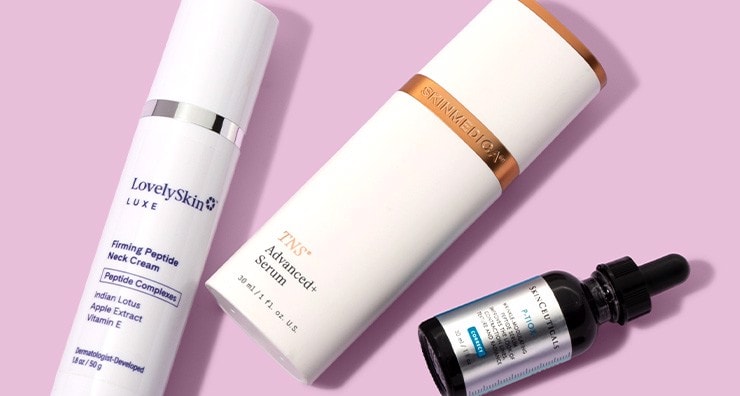
LovelySkin LUXE HA Peptide Serum
This lightweight serum combines hyaluronic acid with growth factor-derived peptides to plump, firm, and hydrate while supporting increased collagen production. Swiss apple stem cells and Persian silk tree extract help fight the look of skin fatigue for a smoother, more radiant complexion.

The best peptide serum for expression lines
SkinCeuticals P-TIOX Wrinkle Modulating Peptide Serum
An Advanced Peptide Complex of 2% hexapeptide and 2% dipeptide works alongside 5% PHA, 5% niacinamide, and 1% laminaria extract to visibly smooth nine types of contraction lines and refine texture. It can be used on its own or to complement in-office neuromodulator treatments, and it reduced the look of global fine lines by 20.6% in 12 weeks in clinical testing.

The best peptide serum with growth factors
SkinMedica TNS® Advanced+ Serum
This bestselling serum pairs SkinMedica’s growth factor technology with a firming Tripeptide Complex and a blend of botanicals, peptides, and marine extracts that supports skin renewal. It helps soften the look of wrinkles and supports smoother, plumper-looking skin in as little as two weeks.

The best peptide moisturizer for dry skin
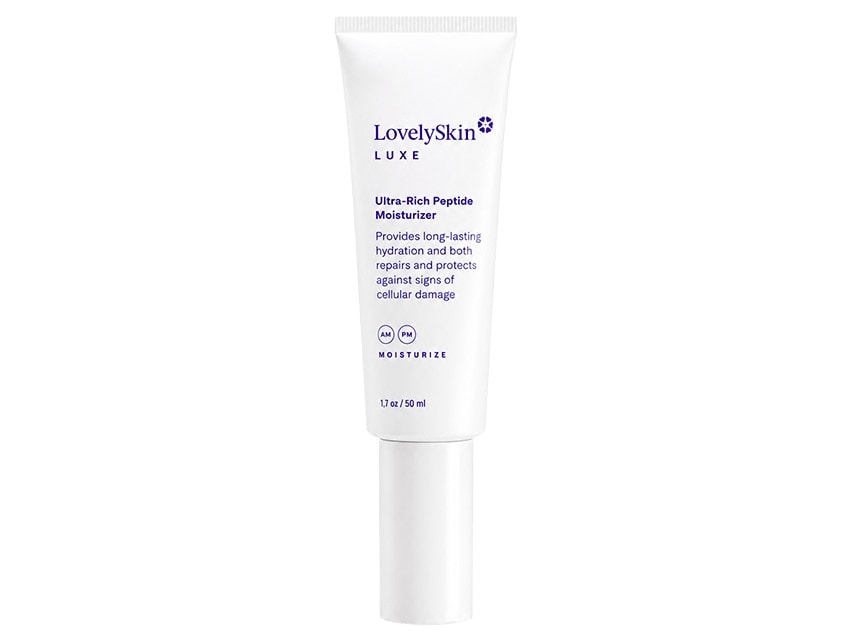
LovelySkin LUXE Ultra-Rich Peptide Moisturizer
Designed for normal to dry skin, this deeply hydrating cream combines peptides and pomegranate oil to help address visible cellular damage. Argan and grapeseed oils deliver nourishing moisture, making it an ideal follow-up to your favorite peptide serum.
The best peptide cream for face and neck
skinbetter science InterFuse Treatment Cream FACE & NECK
This peptide-rich cream uses patented InterFuse Technology to efficiently deliver a blend of peptides that target visible signs of collagen and elastin loss. It improves the appearance of firmness, smoothness, suppleness, and crepiness on both the face and neck.

The best multitasking peptide serum
ALASTIN Skincare Restorative Skin Complex with TriHex+
Powered by TriHex+ Technology with Octapeptide-45, this daily serum helps support the skin’s natural production of collagen and elastin while defending against environmental damage. The updated formula features 131% higher hyaluronic acid levels for improved hydration and a brighter, smoother-looking complexion.

The best peptide neck cream
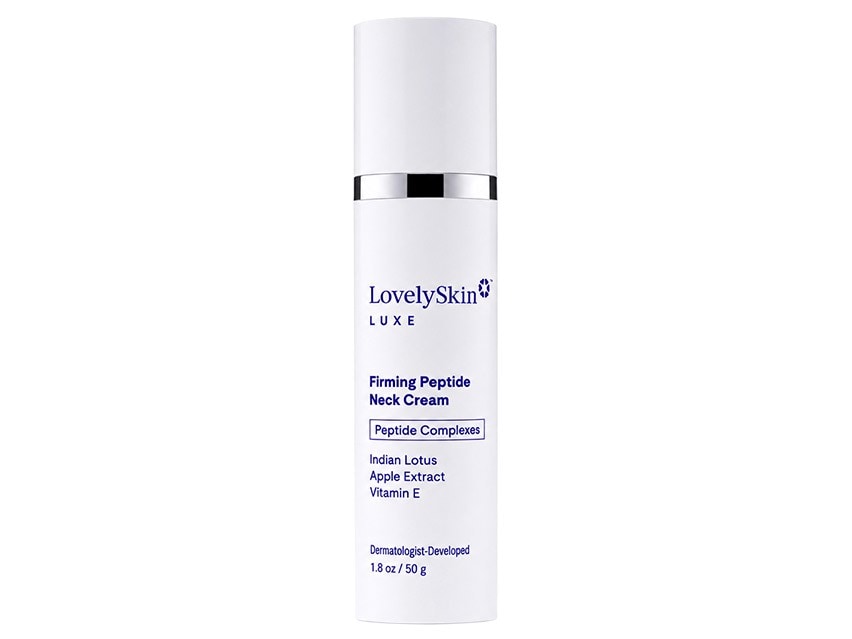
LovelySkin LUXE Firming Peptide Neck Cream
Specially formulated for the delicate skin of the neck and décolleté, this cream features an Advanced Multi-Peptide Complex that supports skin renewal for improved-looking firmness, lift, and elasticity. It also hydrates and softens the appearance of fine lines, wrinkles, and crepey skin.
Looking for more proven ways to enhance your skin care routine? Read our ingredient spotlight on beta-glucan and see why it deserves a spot in your skin care routine on the LovelySkin blog.
Follow us on social
Follow us on social networks and be one of the first to learn about sales, giveaways, and free samples